Francisco de Goya
RomantismoBiografia
Francisco Goya was a talented Spanish painter and printmaker, and is considered one of the last of the Old Masters of painting, as well as the first of the moderns. He began his apprenticeship in painting at the age of 14, and his talent was quickly recognized. He first submitted entries to the Royal Academy of Fine Arts in 1763, and then later in 1766, both of which were denied. But, in 1771, he traveled to Rome and won second place in a painting competition and secured employment designing tapestries at the Royal Tapestry Factory. He completed over 42 patterns, which were used to cover the walls in the newly built palaces around Madrid, giving him an immediate royal audience. In the 1780’2 he became friendly with the crown prince of Spain, spending two summers with him and his family, paintings portraits, and expanding his circle of royal patrons. He was given a salaried position as a court painter in 1786, and in 1799 was made the first court painter, painting for the king and his family, as well as the Spanish nobility. Between the years of 1792 and 1793, Goya suffered from a mysterious illness, which made him deaf, and affected his mental behavior. Some current medical scientists believe that his deafness was a result of the lead in which he used in his paints, whereas others believe it may have been some sort of viral encephalitis. Either way, its effect on Goya cannot be understated. After his illness, he became withdrawn and introspective, and began painting a series of disturbing paintings on the walls of his house in Quinta del Sordo. His earlier themes of merry festivals and cartoons changed into depictions of war and corpses, representing a darkening of his mood. Whether this has more to do with the French declaration of war on Spain or some medical problem leading to mental disturbance is up to debate. As such, his legacy ranges from simple portraits of the royal family to devilish portrayals of demons eating their young. His legacy also has inspired several operas, a piano suite, and a number of feature films.
Obras no acervo
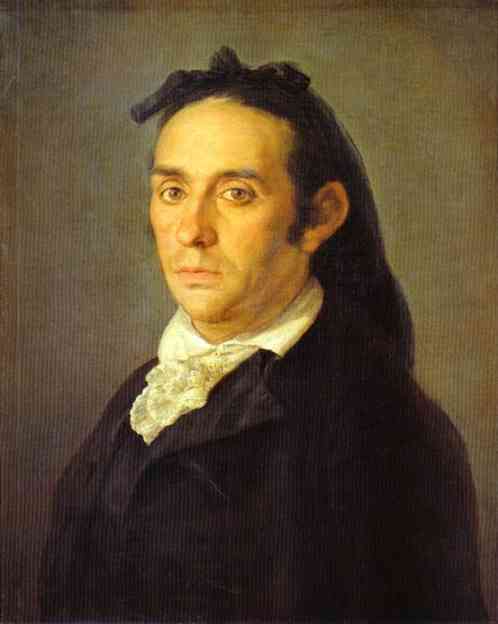 Portrait of the Bullfighter Pedro Romero
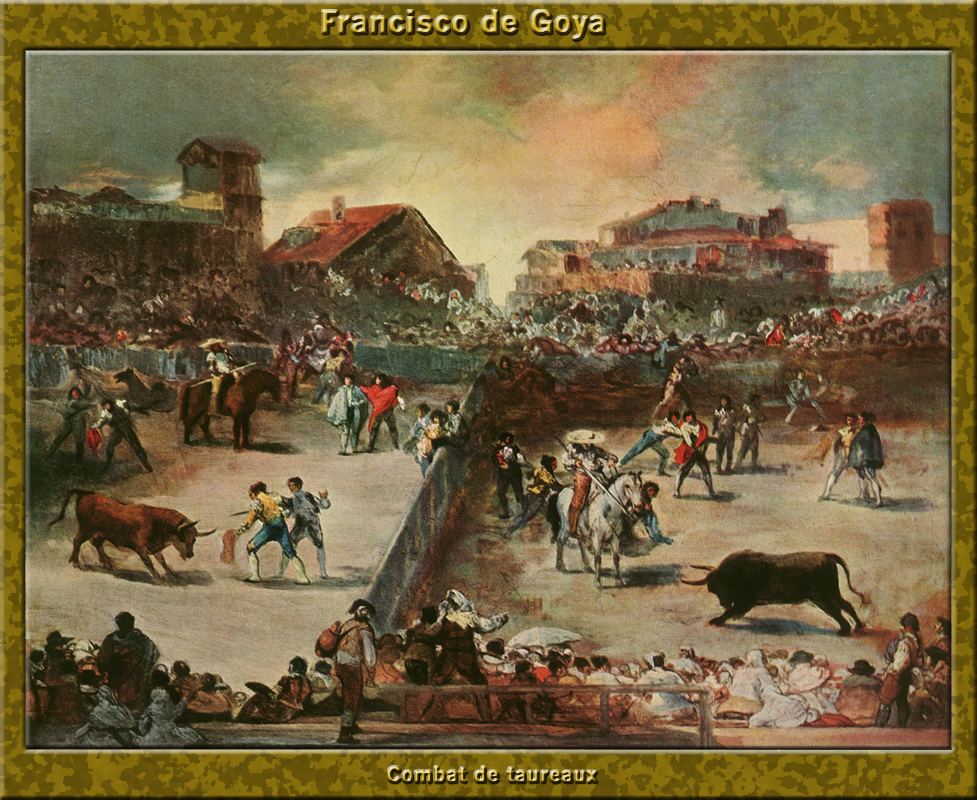 Bullfight
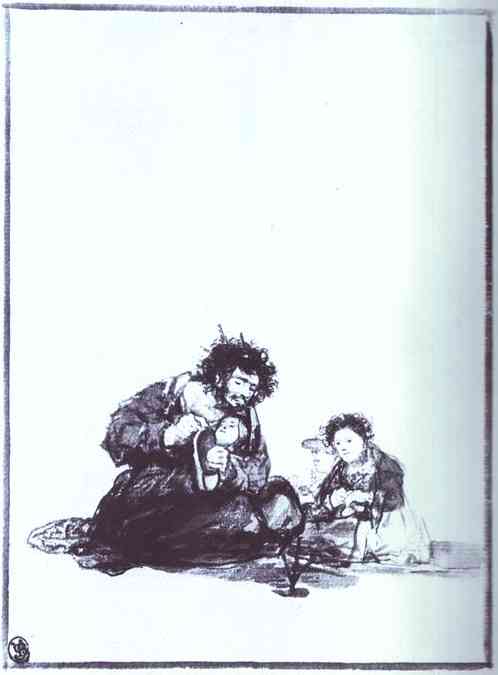 Diligent Blind Man
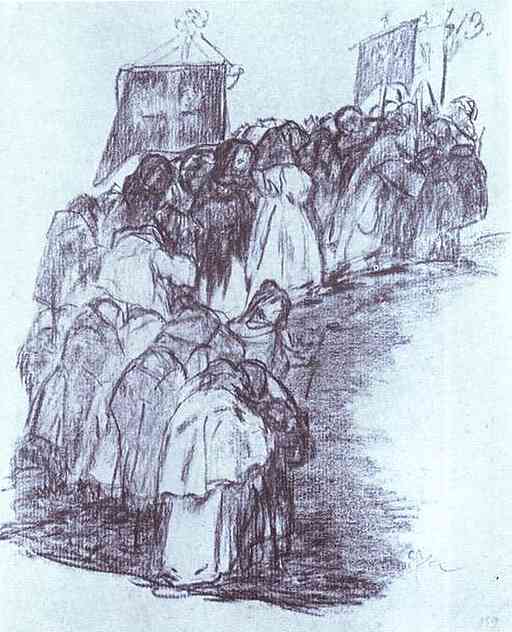 Procession of Monks
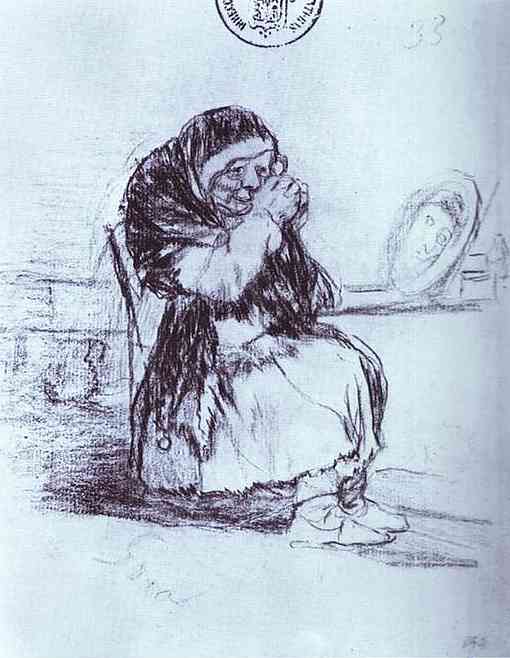 The Old Woman with a Mirror
1828
The Old Woman with a Mirror
1828
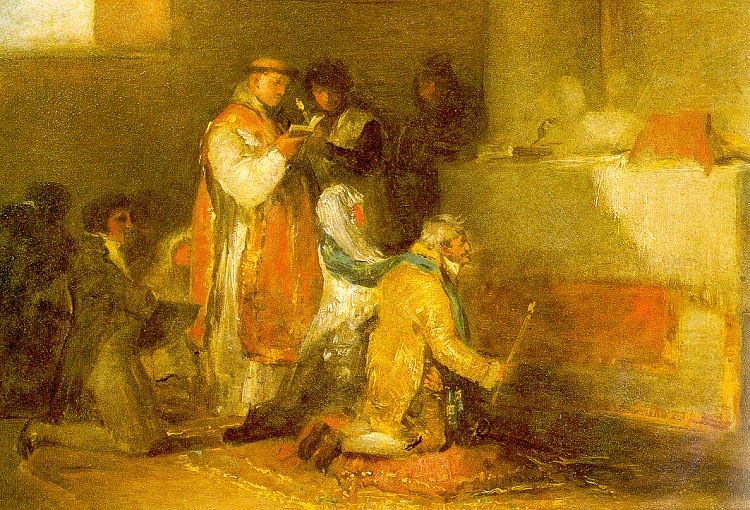 The ill matched Couple
1828
The ill matched Couple
1828
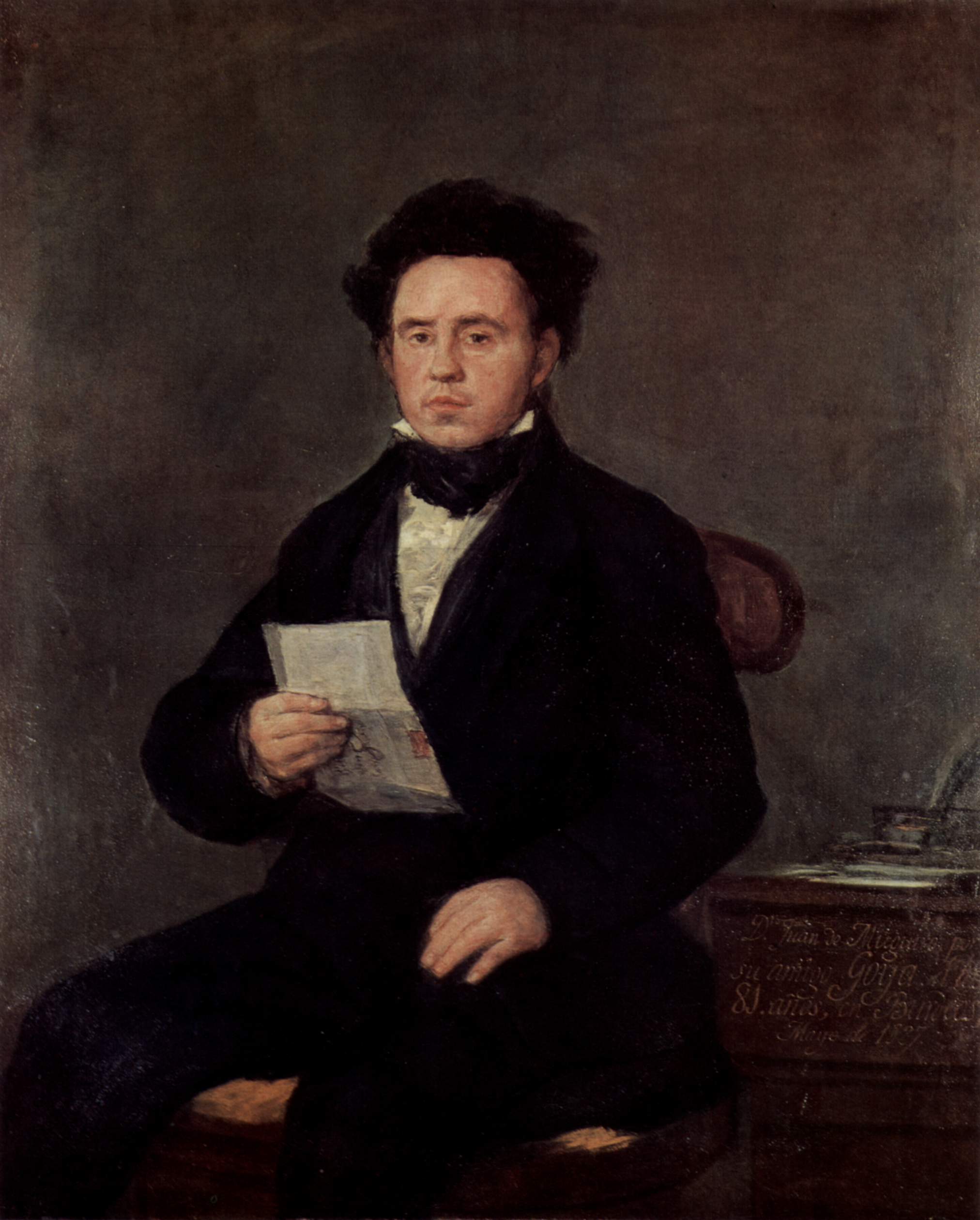 Juan Bautista de Muguiro
1827
Juan Bautista de Muguiro
1827
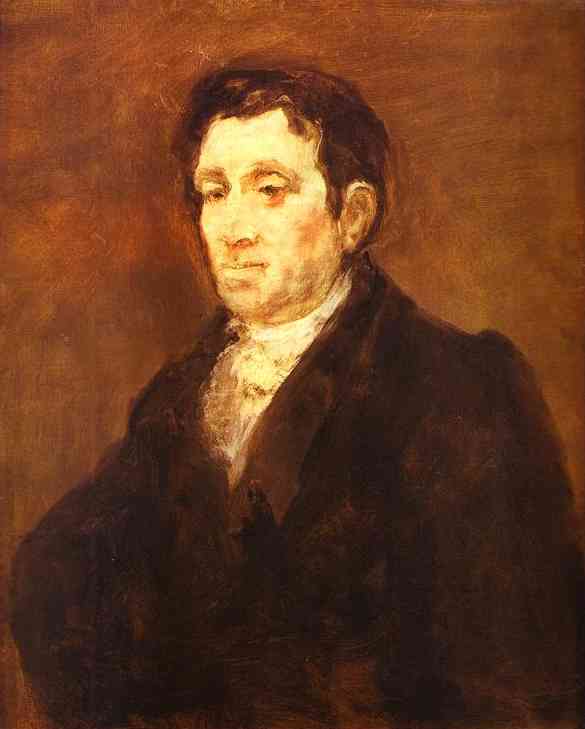 Jose Pio de Molina
1827
Jose Pio de Molina
1827
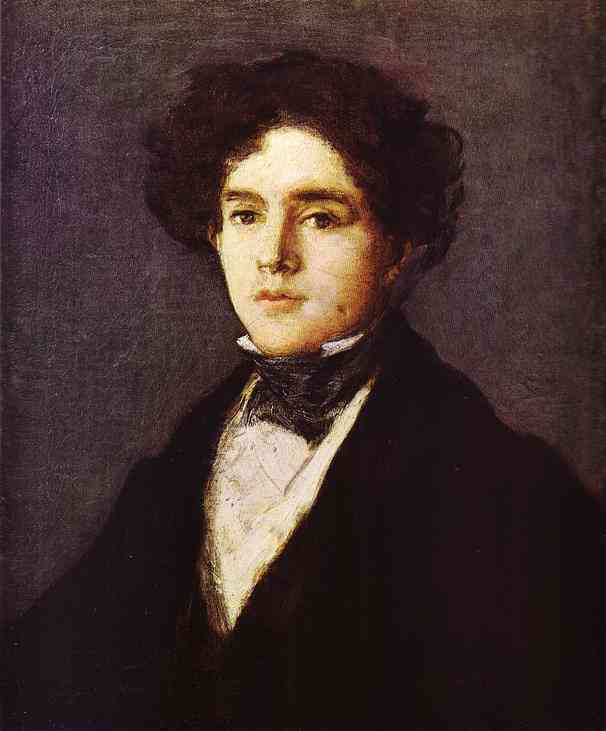 Mariano Goya
1827
Mariano Goya
1827
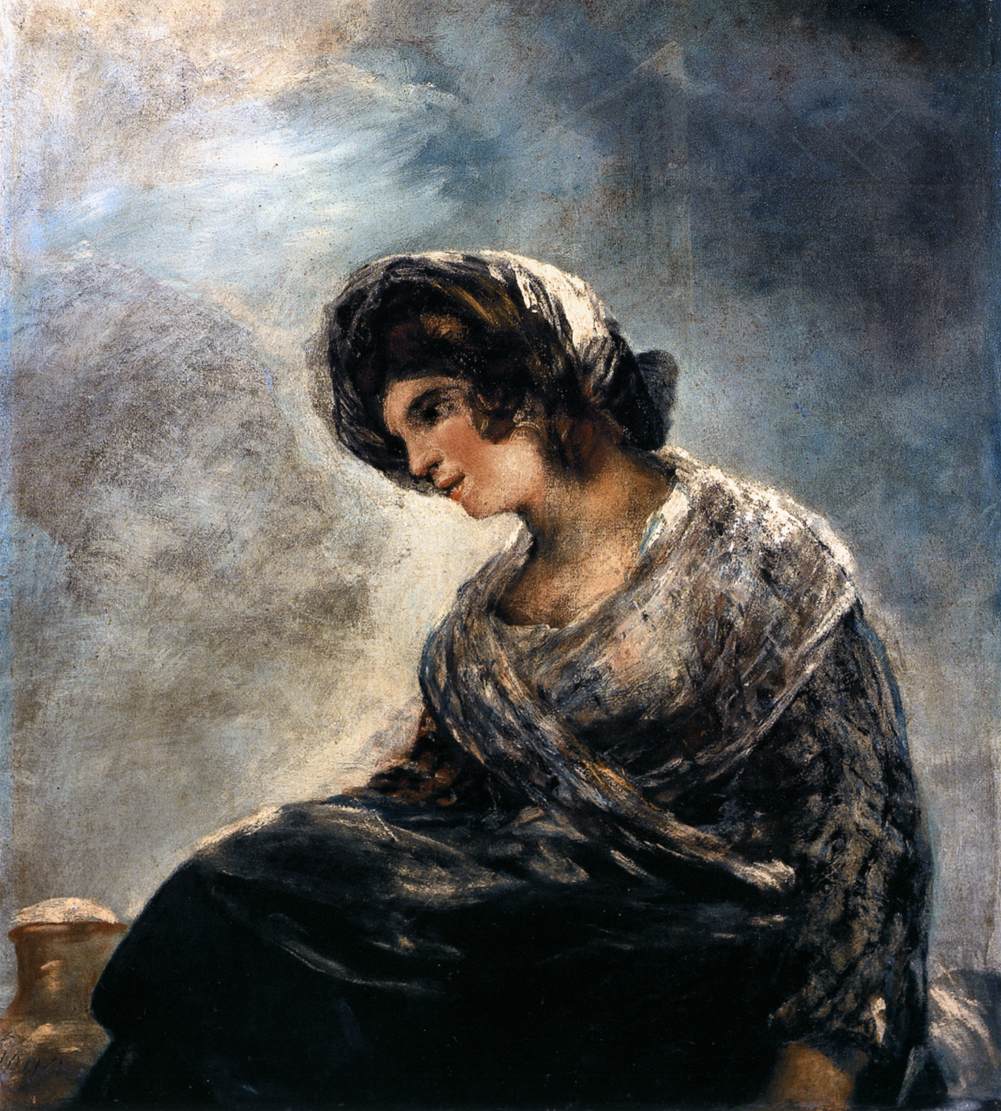 The Milkmaid of Bordeaux
1825
The Milkmaid of Bordeaux
1825
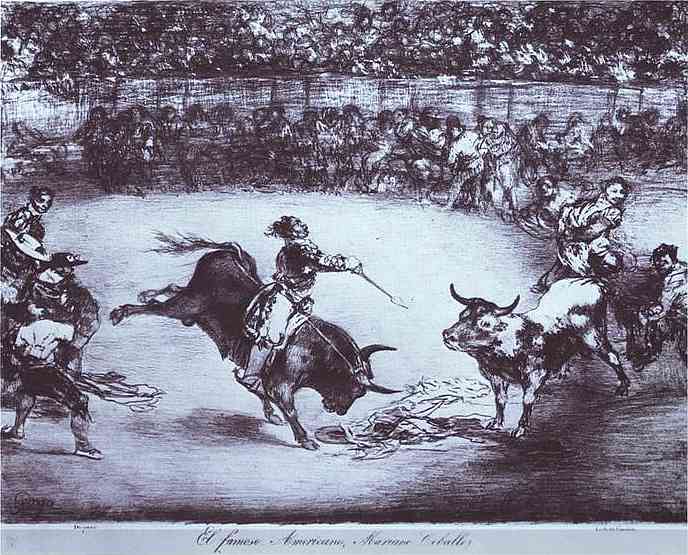 The Famous American, Mariano Ceballos
1825
The Famous American, Mariano Ceballos
1825
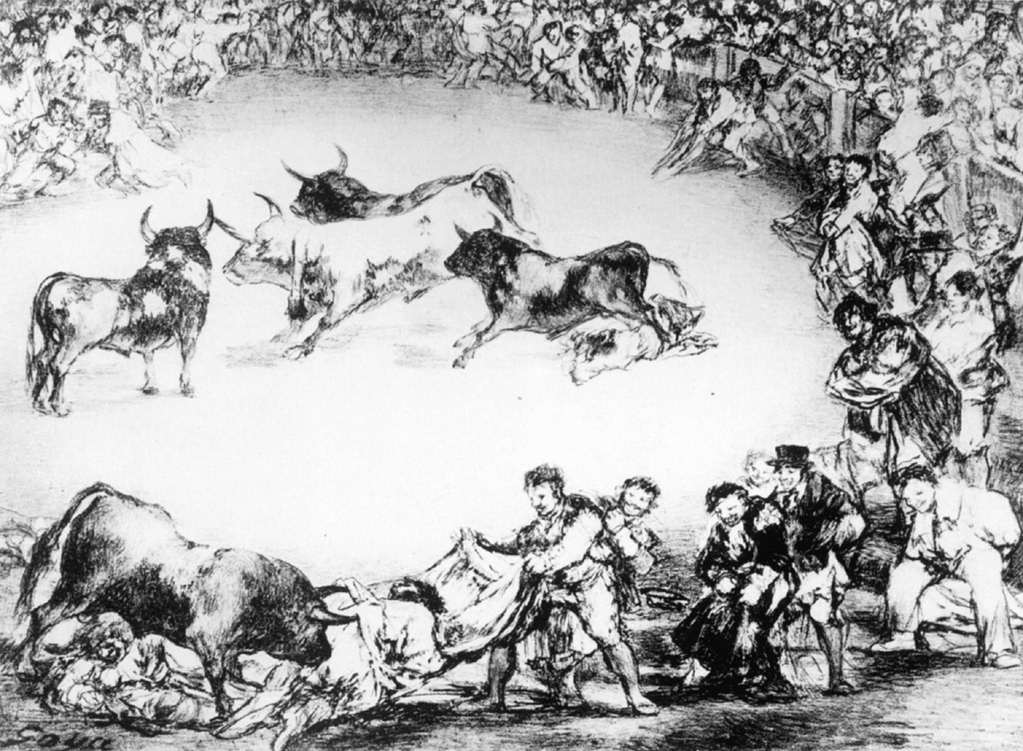 Spanish Entertainment
1825
Spanish Entertainment
1825
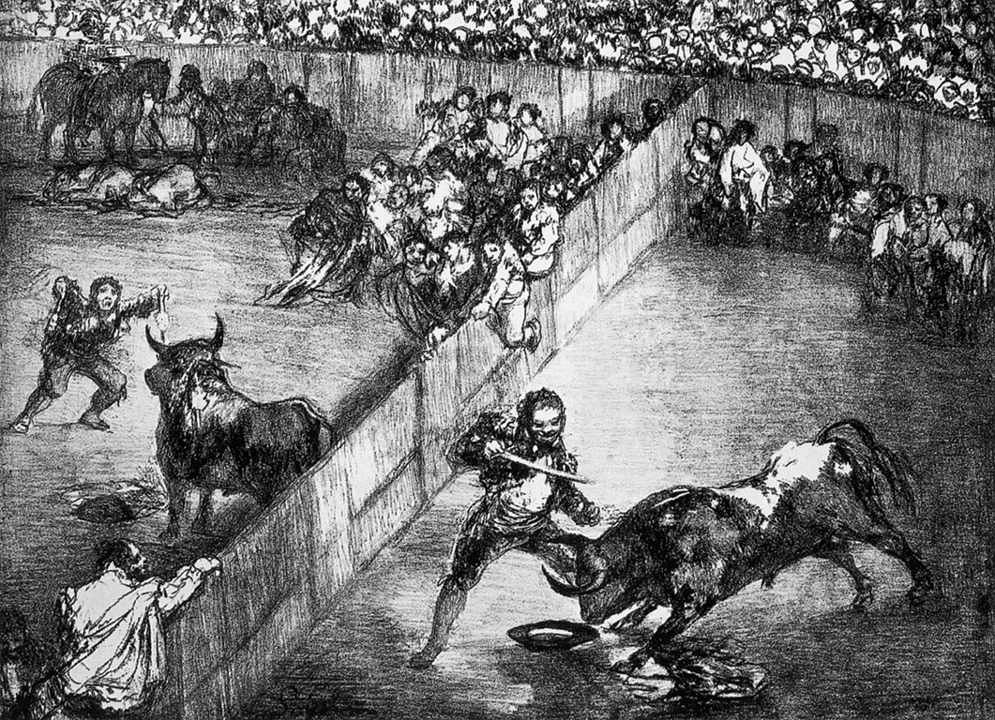 The Divided Arena
1825
The Divided Arena
1825
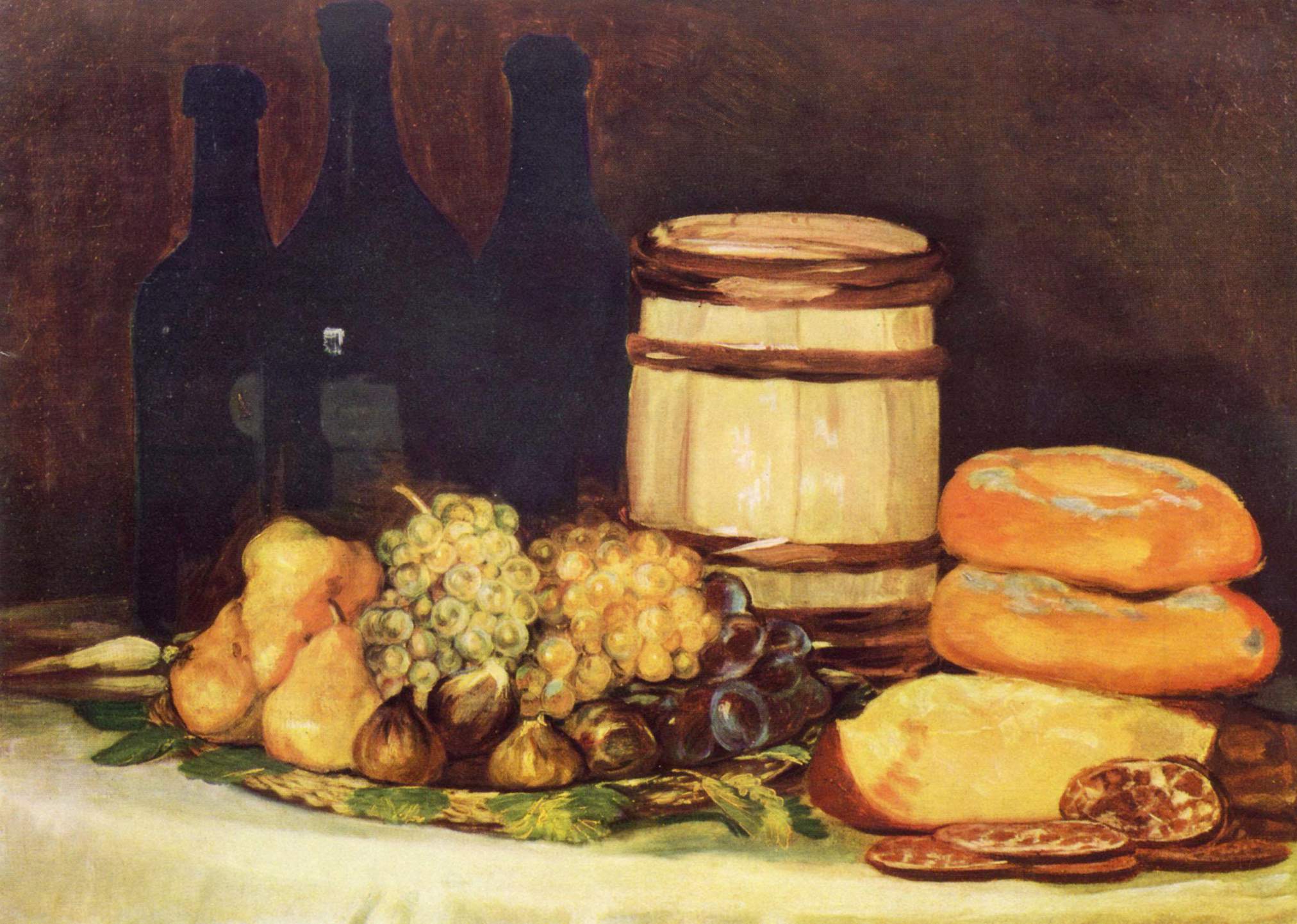 Still life with fruit, bottles, breads
1824
Still life with fruit, bottles, breads
1824
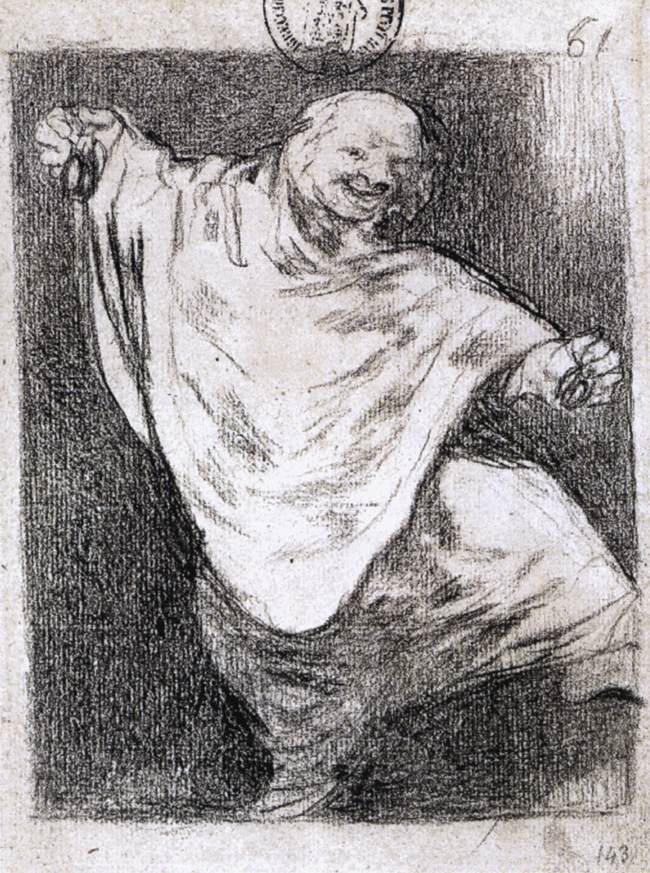 Phantom Dancing with Castanets
1824
Phantom Dancing with Castanets
1824
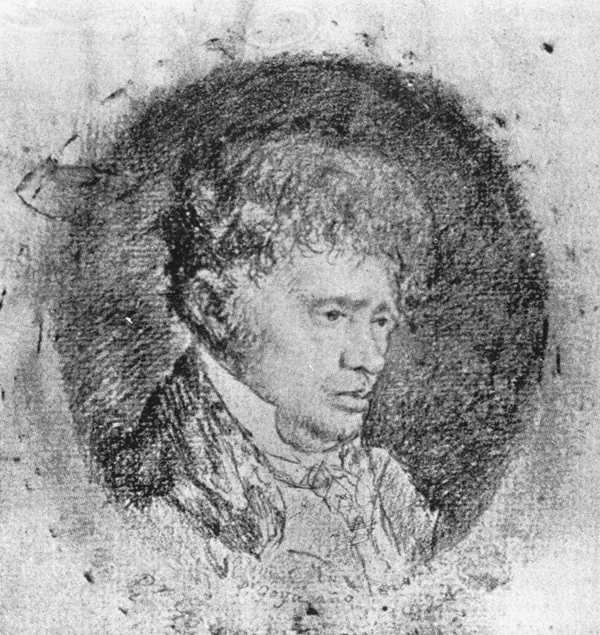 Portrait of Javier Goya, the Artist's Son
1824
Portrait of Javier Goya, the Artist's Son
1824
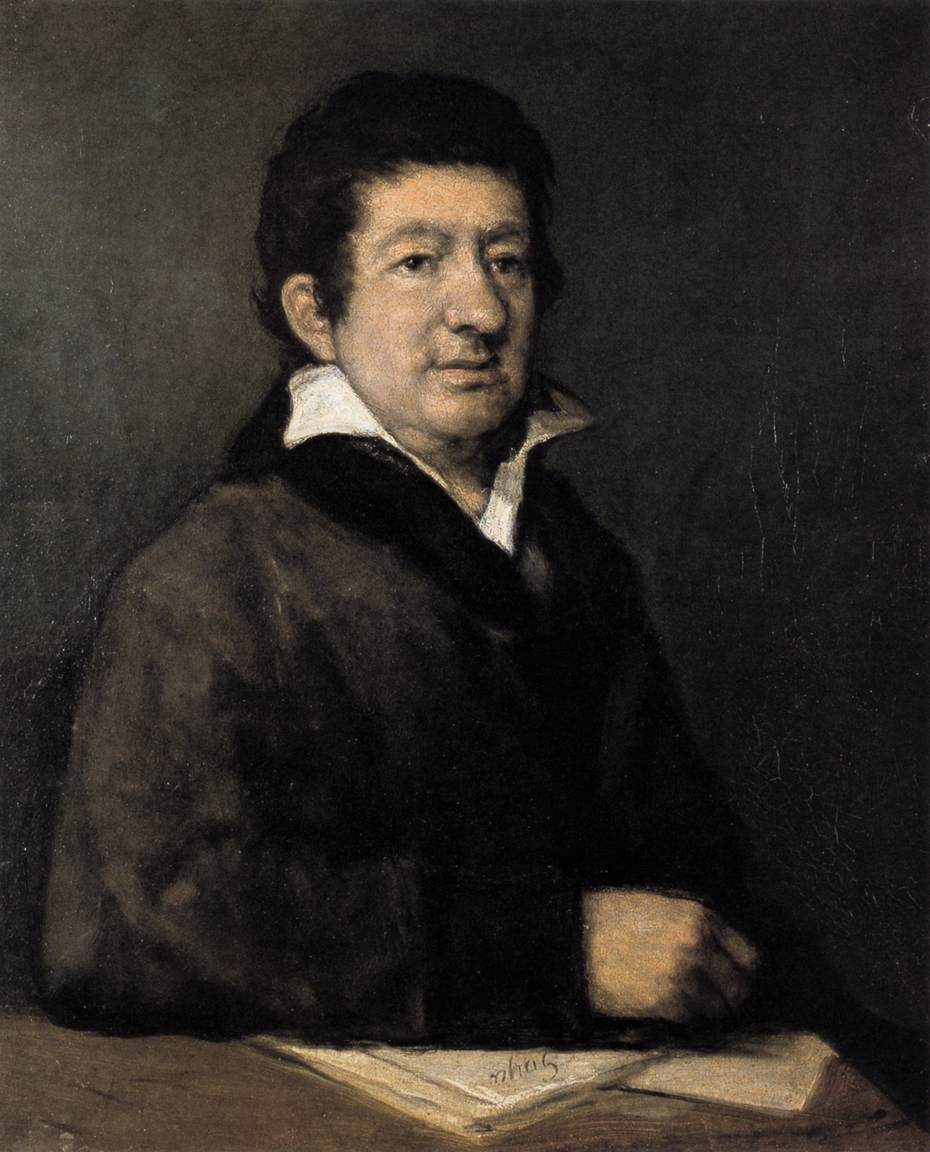 Poet Moratín
1824
Poet Moratín
1824
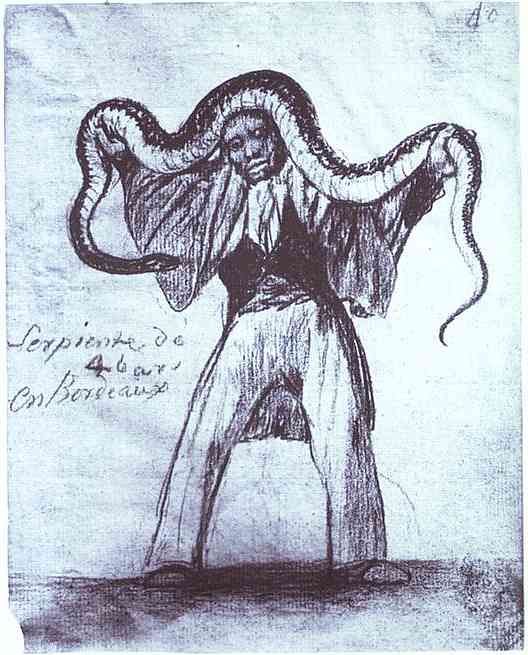 Four Yard Long Snake in Bordeaux
1824
Four Yard Long Snake in Bordeaux
1824
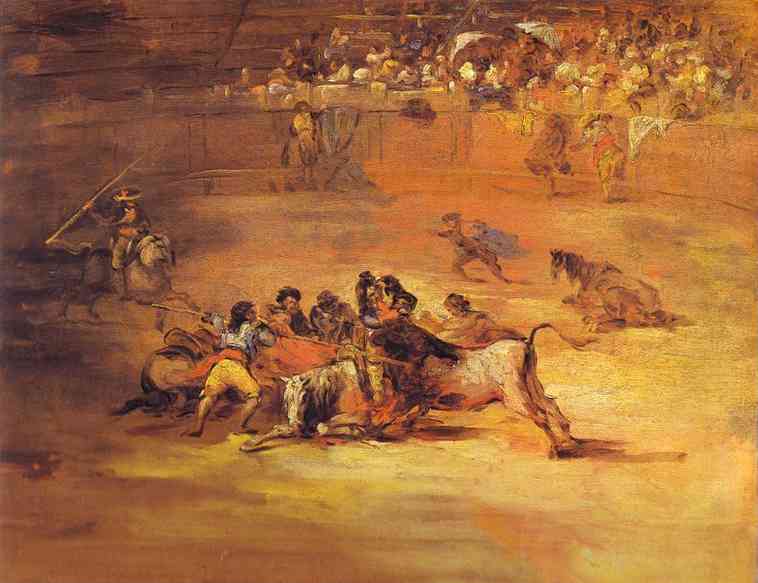 Scene of a bullfight
1824
Scene of a bullfight
1824
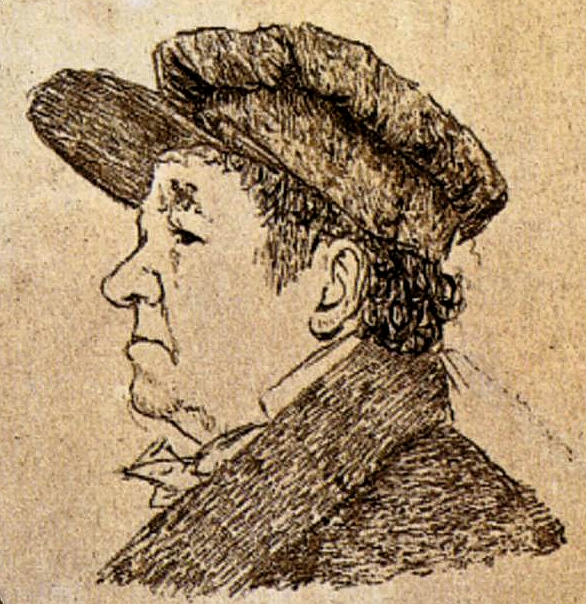 Self Portrait
1824
Self Portrait
1824
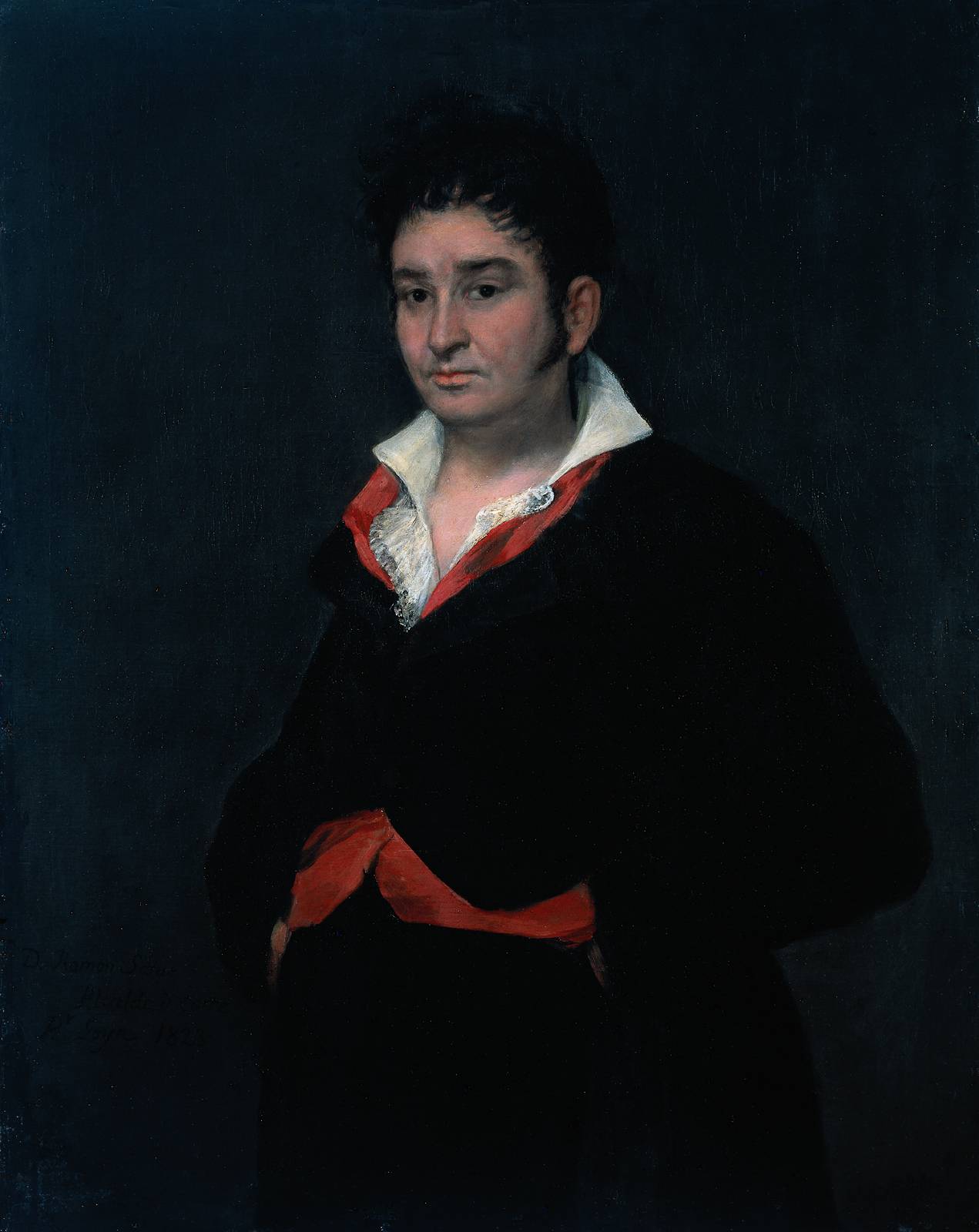 Don Ramon Satue
1823
Don Ramon Satue
1823
 Infante Don Sebastián Gabriel de Borbón y Braganza
1822
Infante Don Sebastián Gabriel de Borbón y Braganza
1822
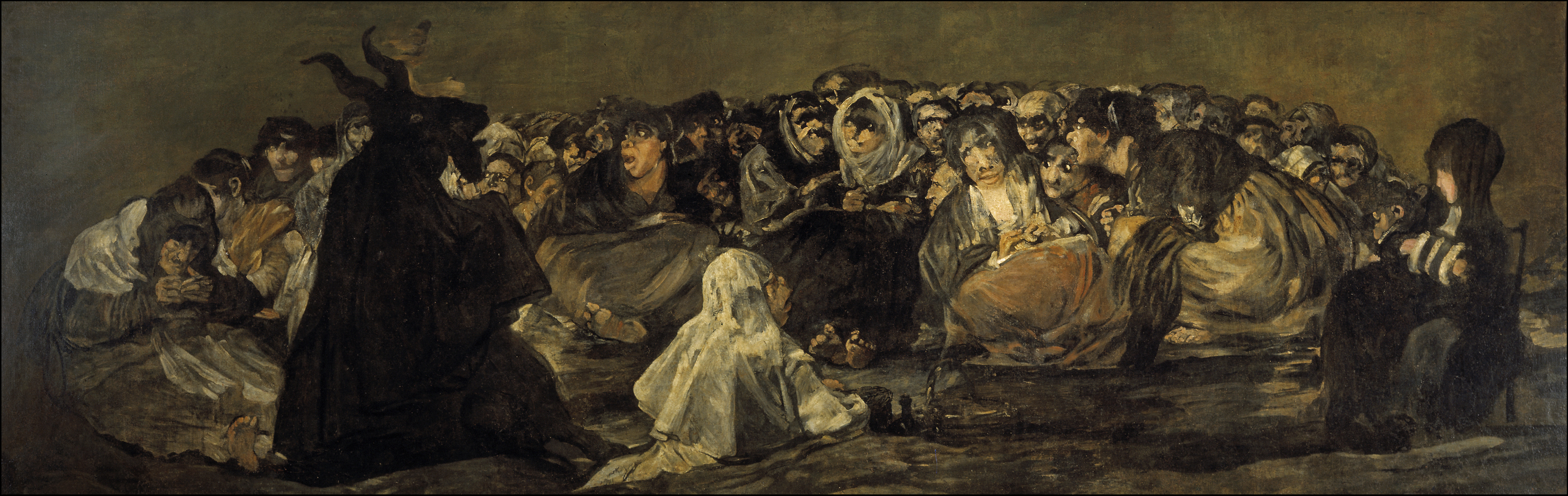 Witches' Sabbath / The Great He-Goat
1821
Witches' Sabbath / The Great He-Goat
1821
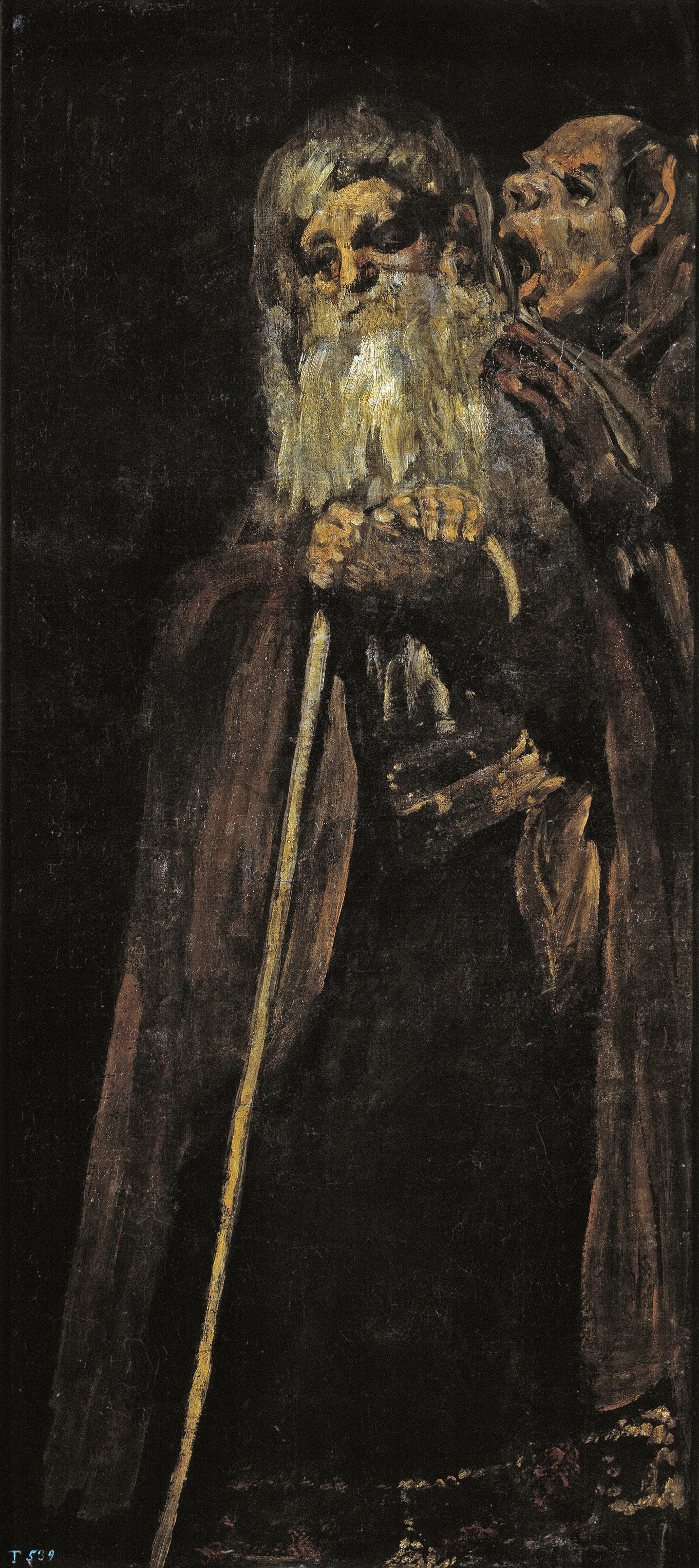 Two Old Men / Two Monks / An Old Man and a Monk
1821
Two Old Men / Two Monks / An Old Man and a Monk
1821