Eugène Delacroix
Biografia
Considered the leader of the French Romantic school of painting, Eugene Delacroix was a prolific artist, producing over 9,000 works during his lifetime, ranging from paintings, to watercolors, pastels and drawings. His work both shaped the Impressionist artists and inspired the Symbolist movement. Taking inspiration from Peter Paul Rubens and the Venetian Renaissance painters, his painting style emphasized colors and movement rather than the carefully modeled form and clear outline. After completing his education in art, he submitted his first work the Paris Salon The Barque of the Dante, which was accepted, in 1822. This first piece caused a sensation and was harshly criticized, but it was nonetheless bough by the State for the Luxembourg Galleries. This began a pattern of his critical reception throughout his career. First, his work was criticized, but later accepted and purchased by the state or personal patron. His works revolved around many themes, many of which were inspired by the works of Shakespeare, Goethe, and Byron, and entailed the motifs of violence and sensuality. Perhaps his most widely know piece is Liberty Leading the Republic, which invoked the image of liberty leading the people. The French government initially bough the painting, but soon deemed it too anti-establishment, and had it withdrawn from view. In 1832, he traveled to Morocco to escape Paris society, and experience a more primitive culture. His time there inspired over 100 paintings, and he compared the people there to the early citizens of Rome or Greece. Perhaps the most scandalous or noteworthy aspect of Delacroix’s personal life was the fact that he was most likely the illegitimate child of Talleyrand, a French diplomat, as his father never conceived any other children. After both his father and mother died, leaving him an orphan at the age of 16, he spent much of life under the protection of the Frenchman. His legacy includes a number of portraits, landscapes, and figure paintings. He also helped found the Societe Nationale des Beaux-Arts, along with other notable French artists of the day. His face was featured on the French banknote, minted in 2003.
Obras no acervo
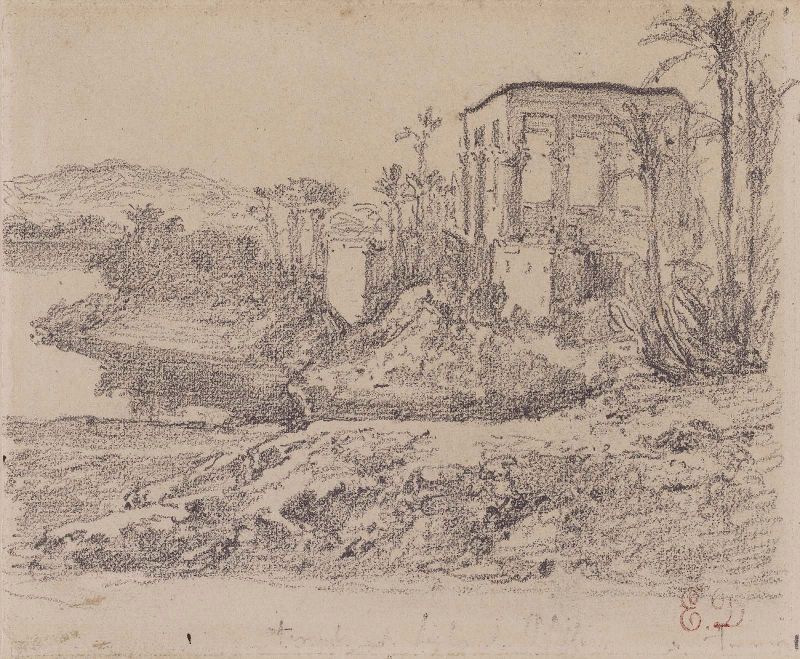 Kiosk of Trajan at Philae
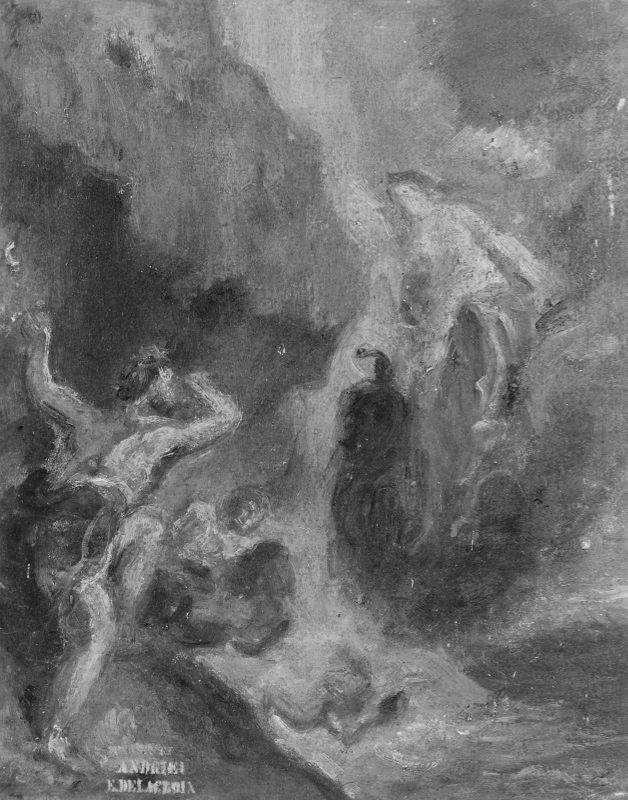 Winter Juno Beseeching Aeolus to Destroy the Fleet
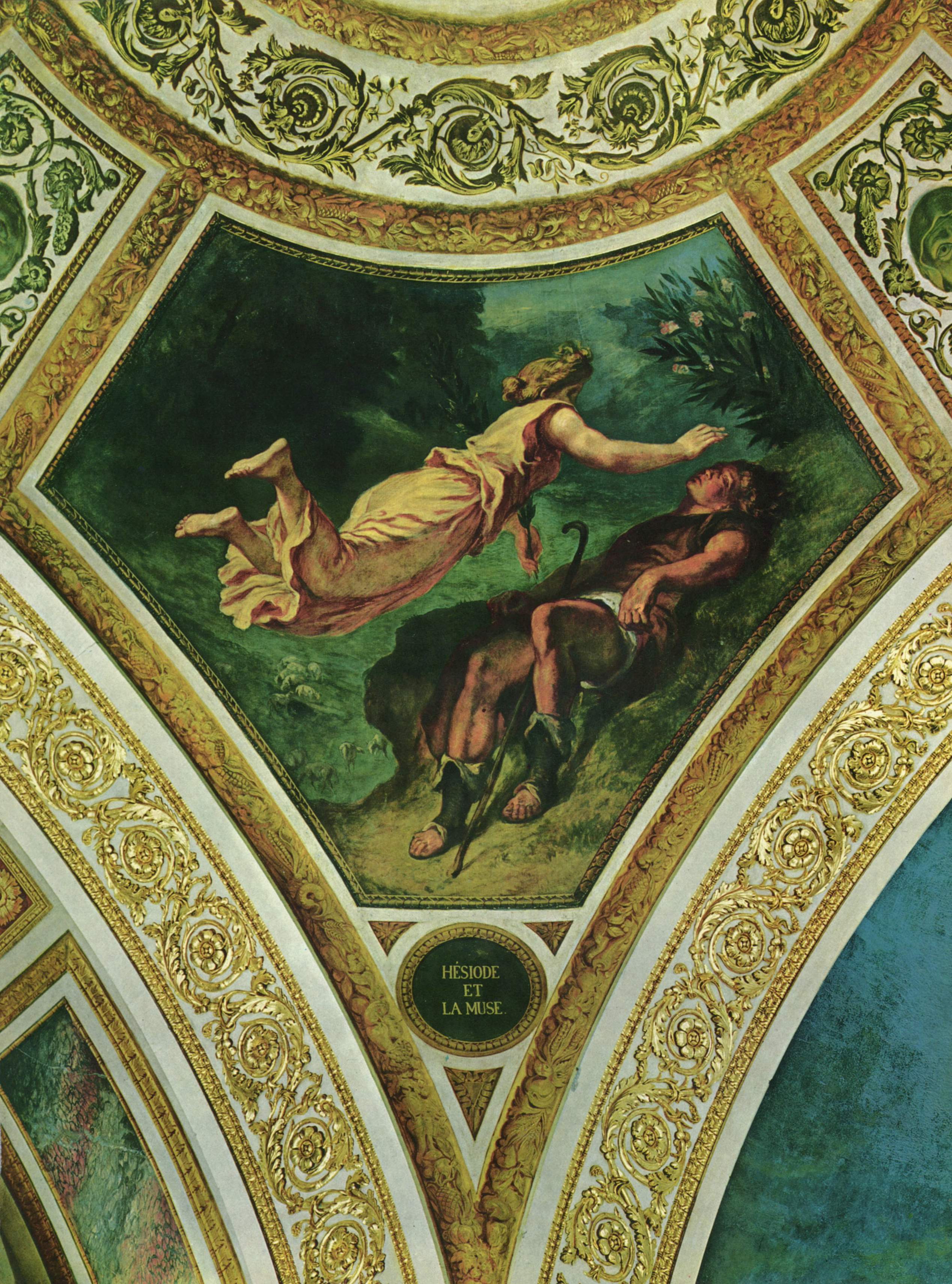 Hesiod and the Muse
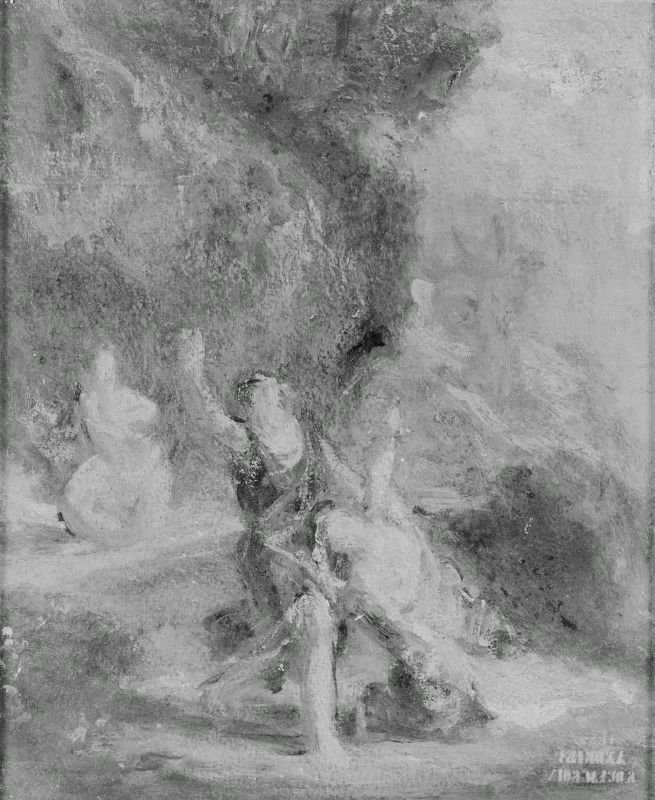 Spring Orpheus Coming to the Aid of Eurydice
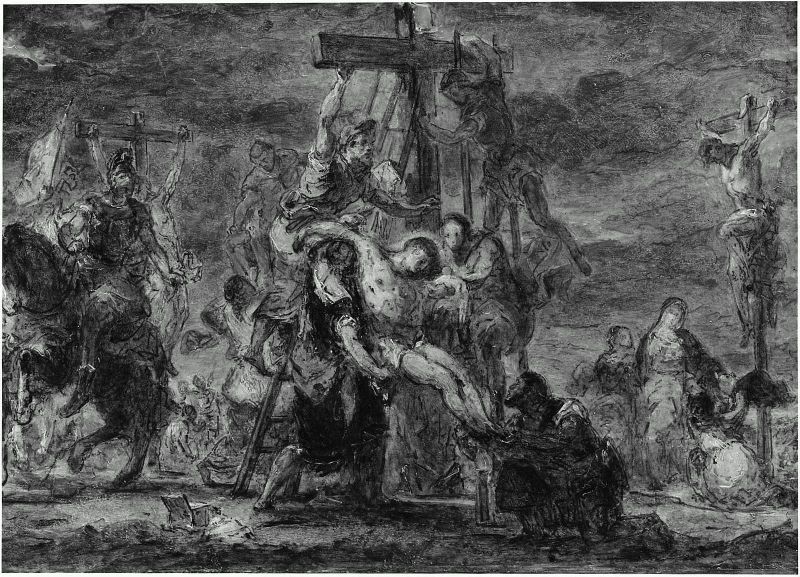 The Descent from the Cross
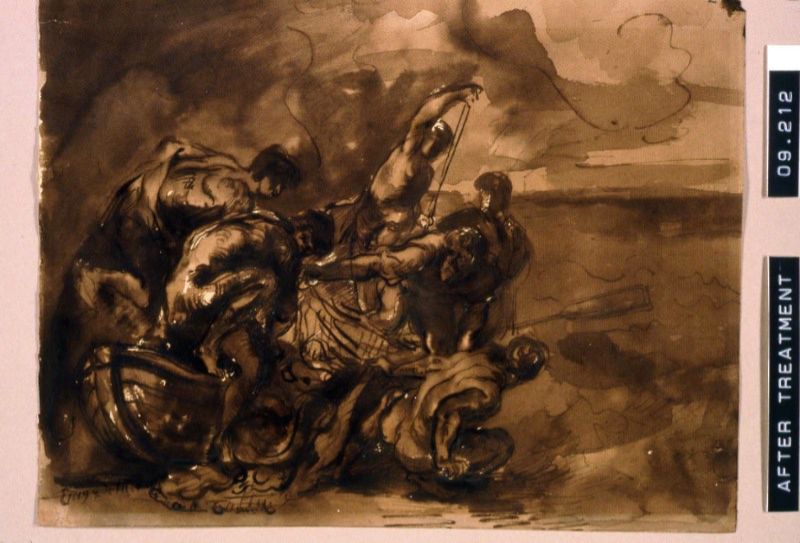 The Miraculous Draught of Fishes
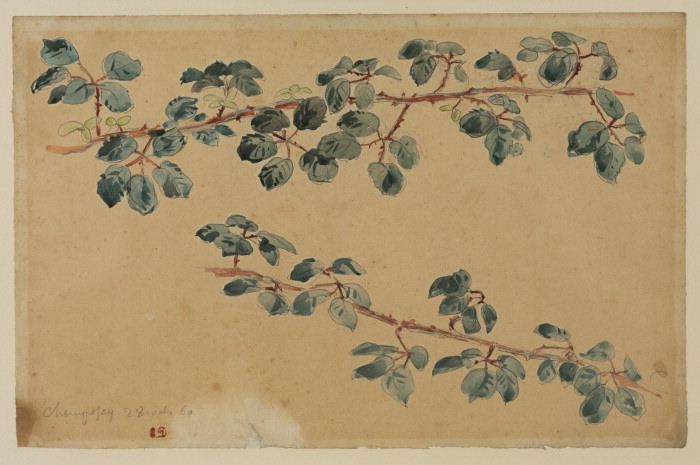 Two branches with leaves
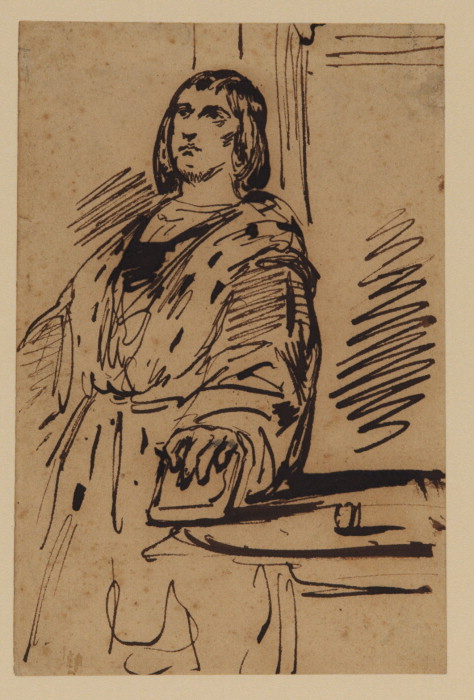 Study of a man in costume
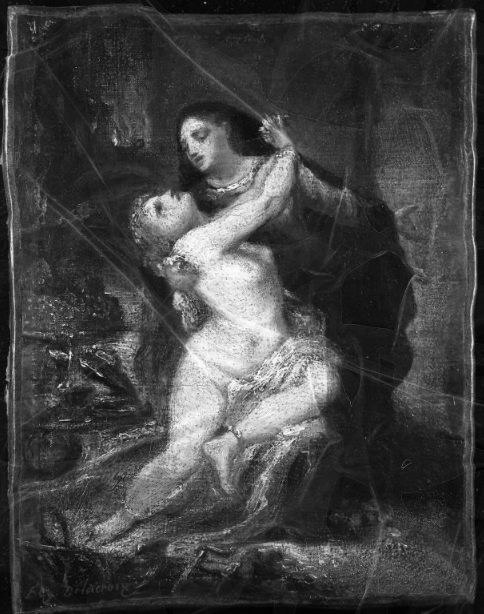 Two Figures
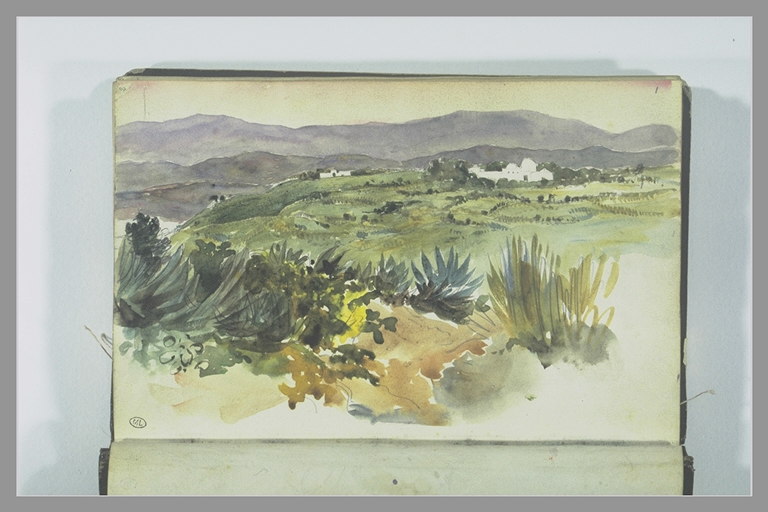 Landscape near Tangier
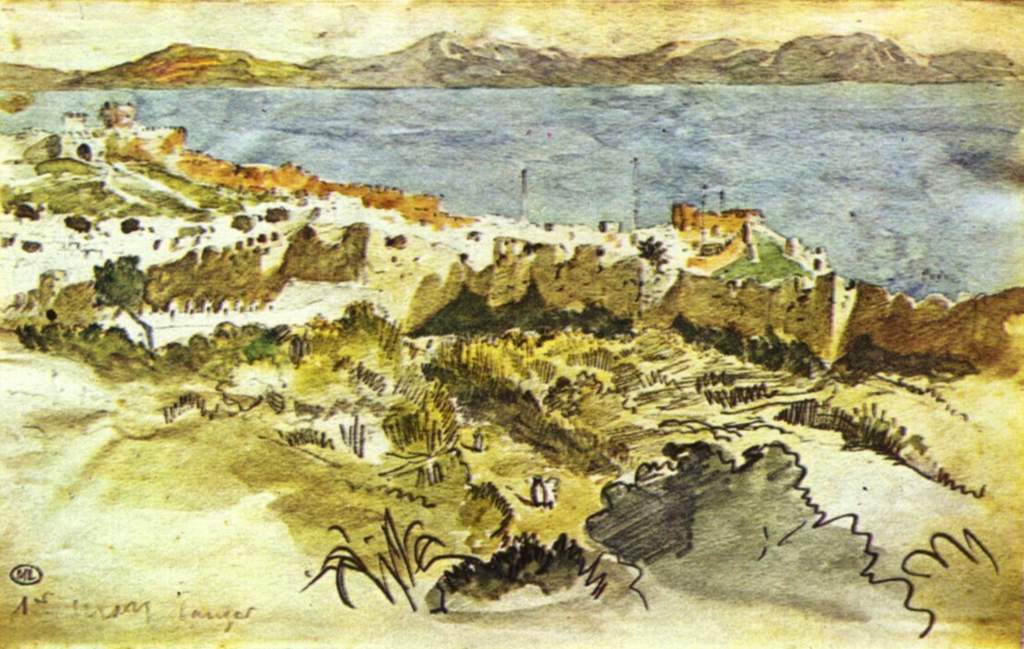 Bay of Tangier in Morocco
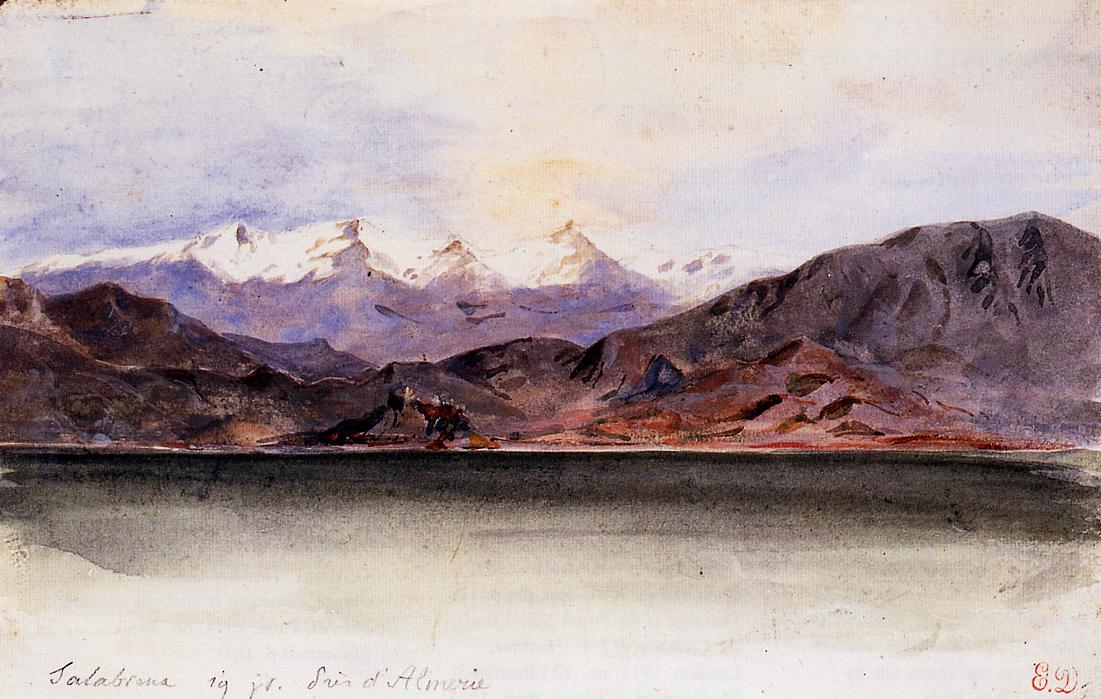 The Coast of Spain at Salabrena
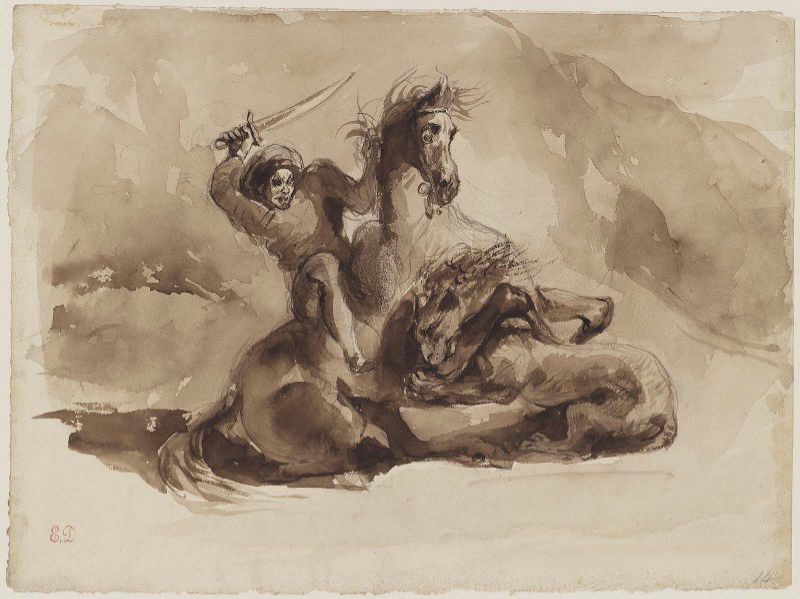 Horse and Rider Attacked by a Lion
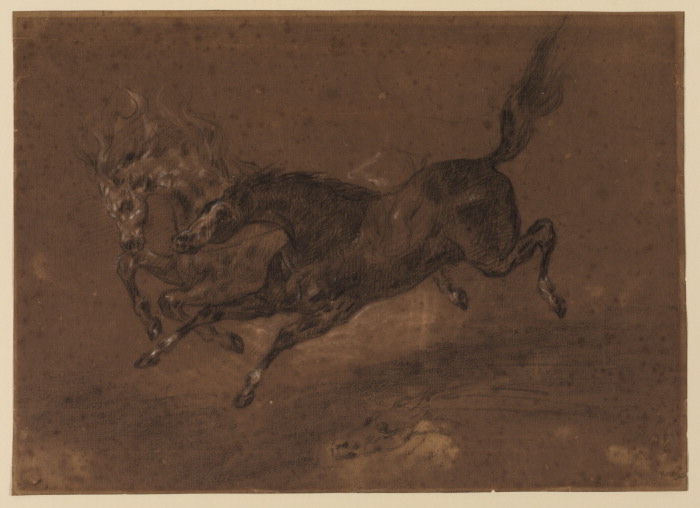 Horses running
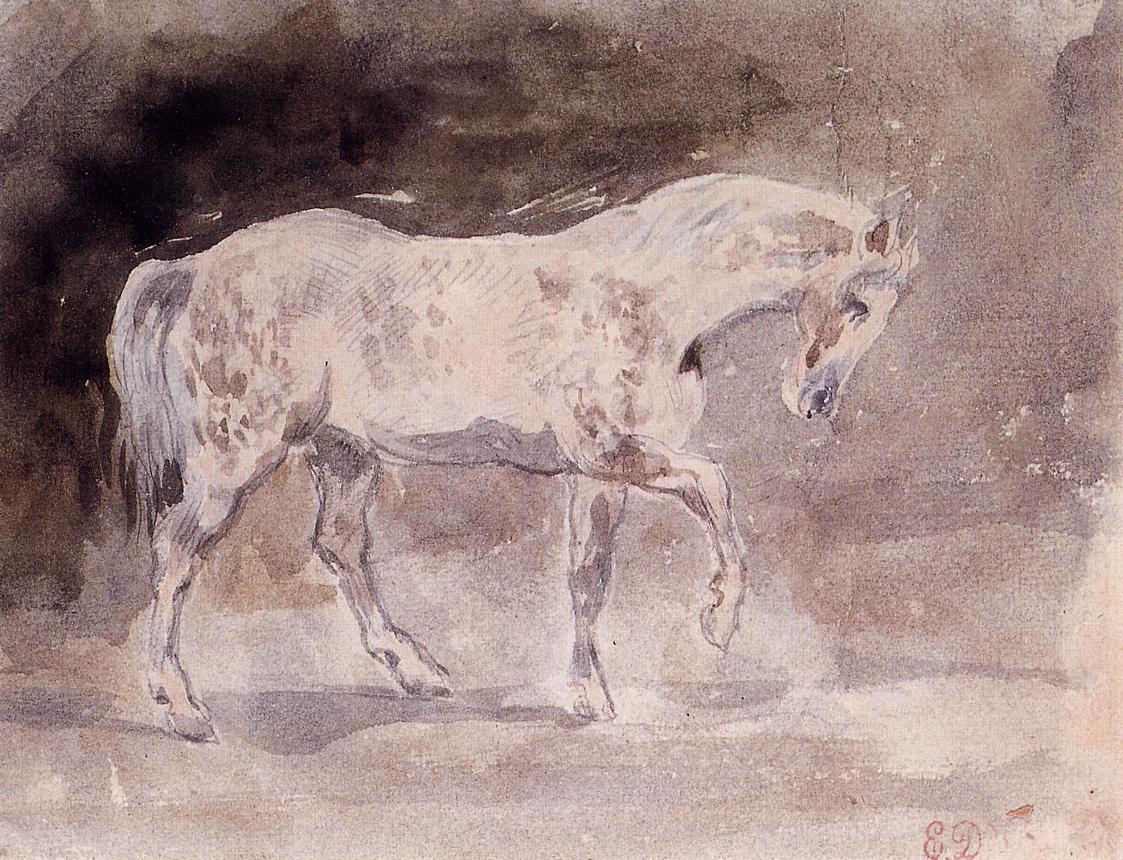 Horse
Horse
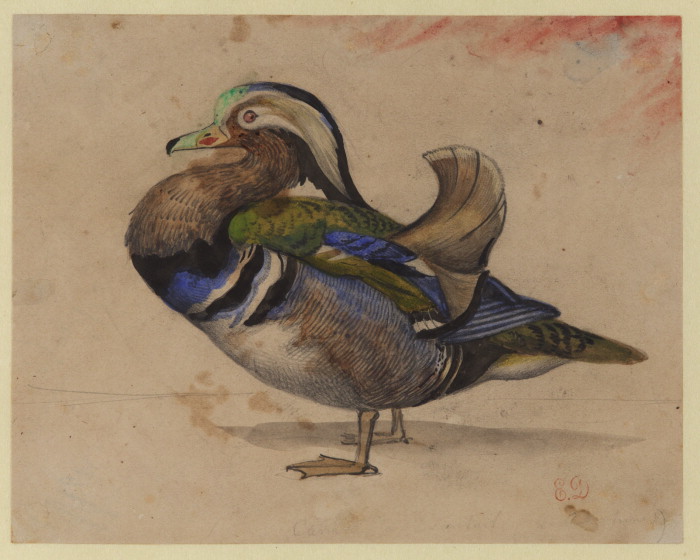 A Mandarin drake
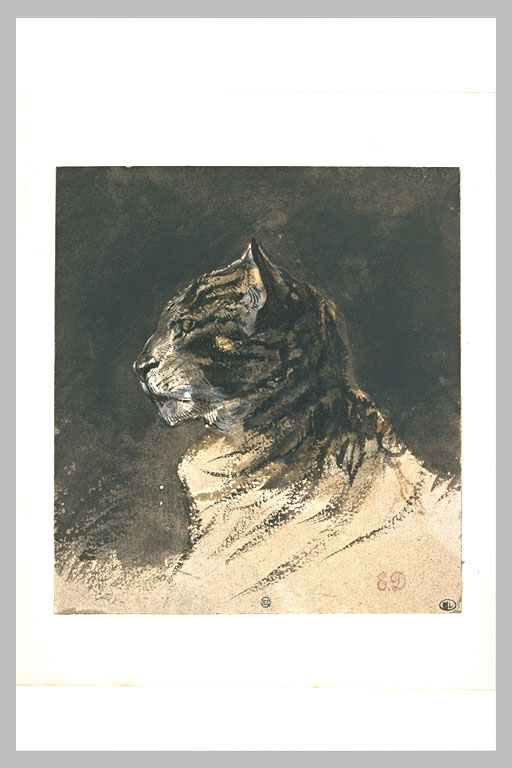 Cat head
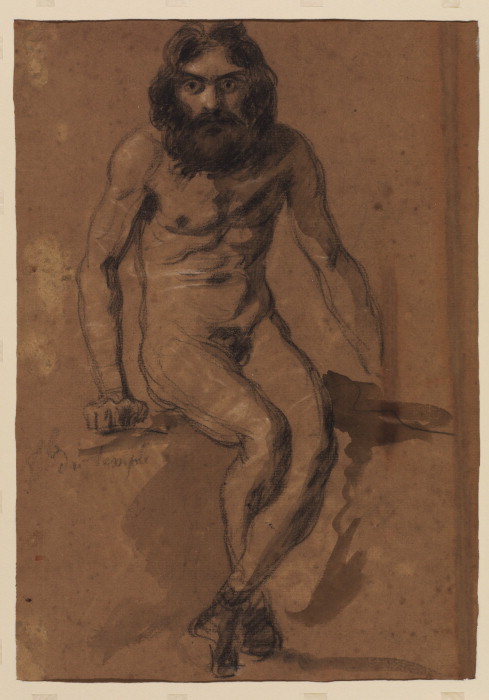 Nude bearded man, seated
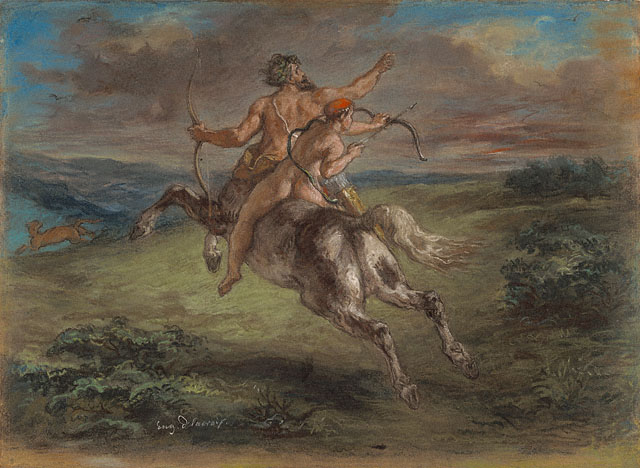 The Education of Achilles
1862
The Education of Achilles
1862
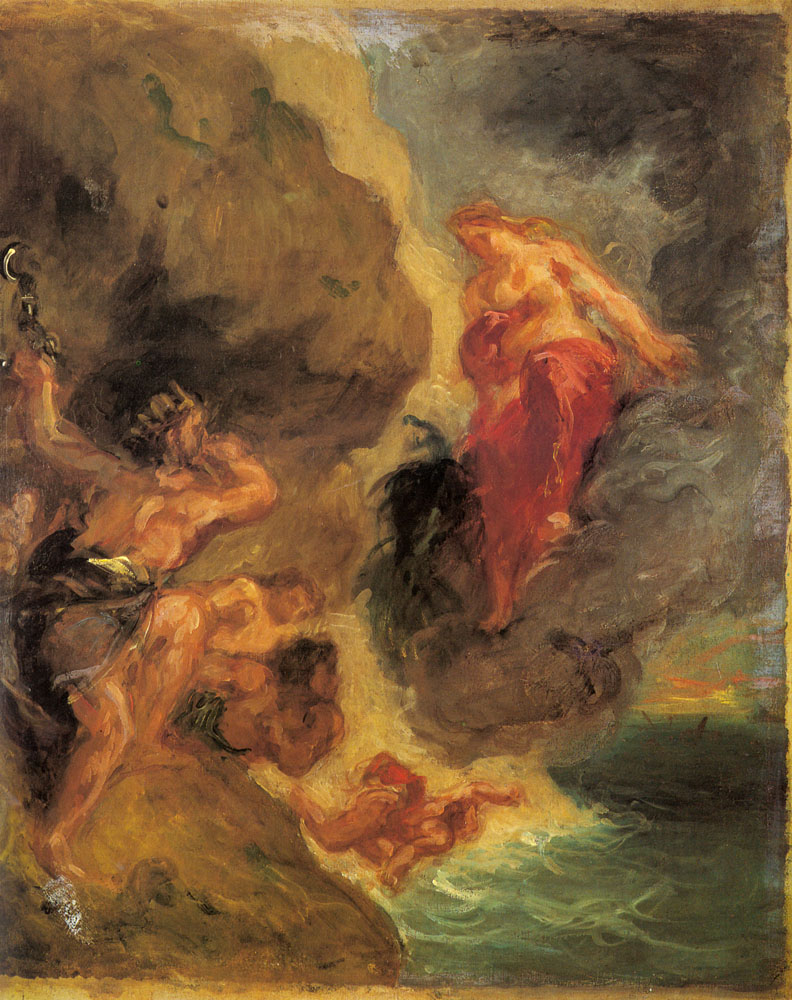 Winter Juno And Aeolus
1862
Winter Juno And Aeolus
1862
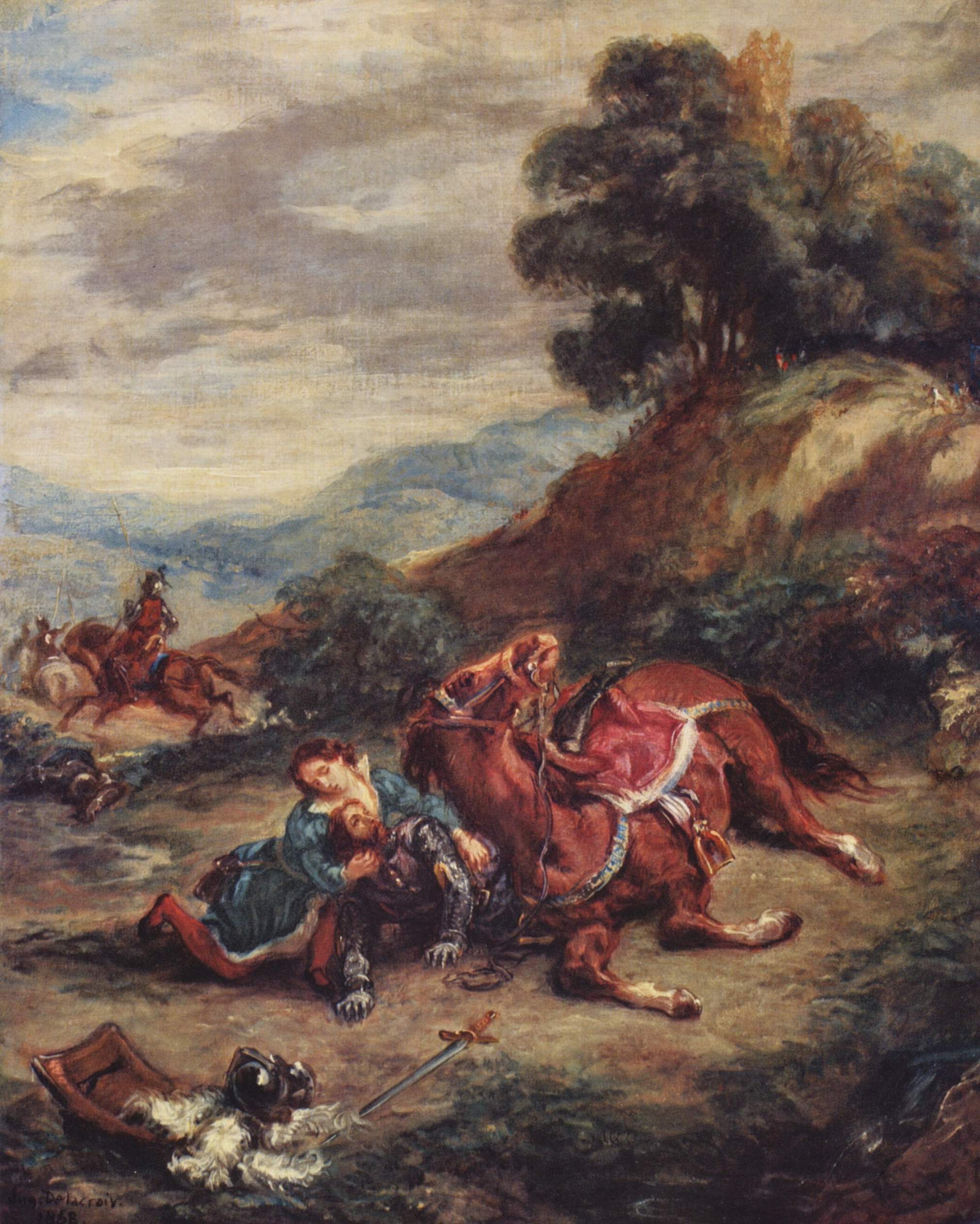 The death of Laras
1858
The death of Laras
1858
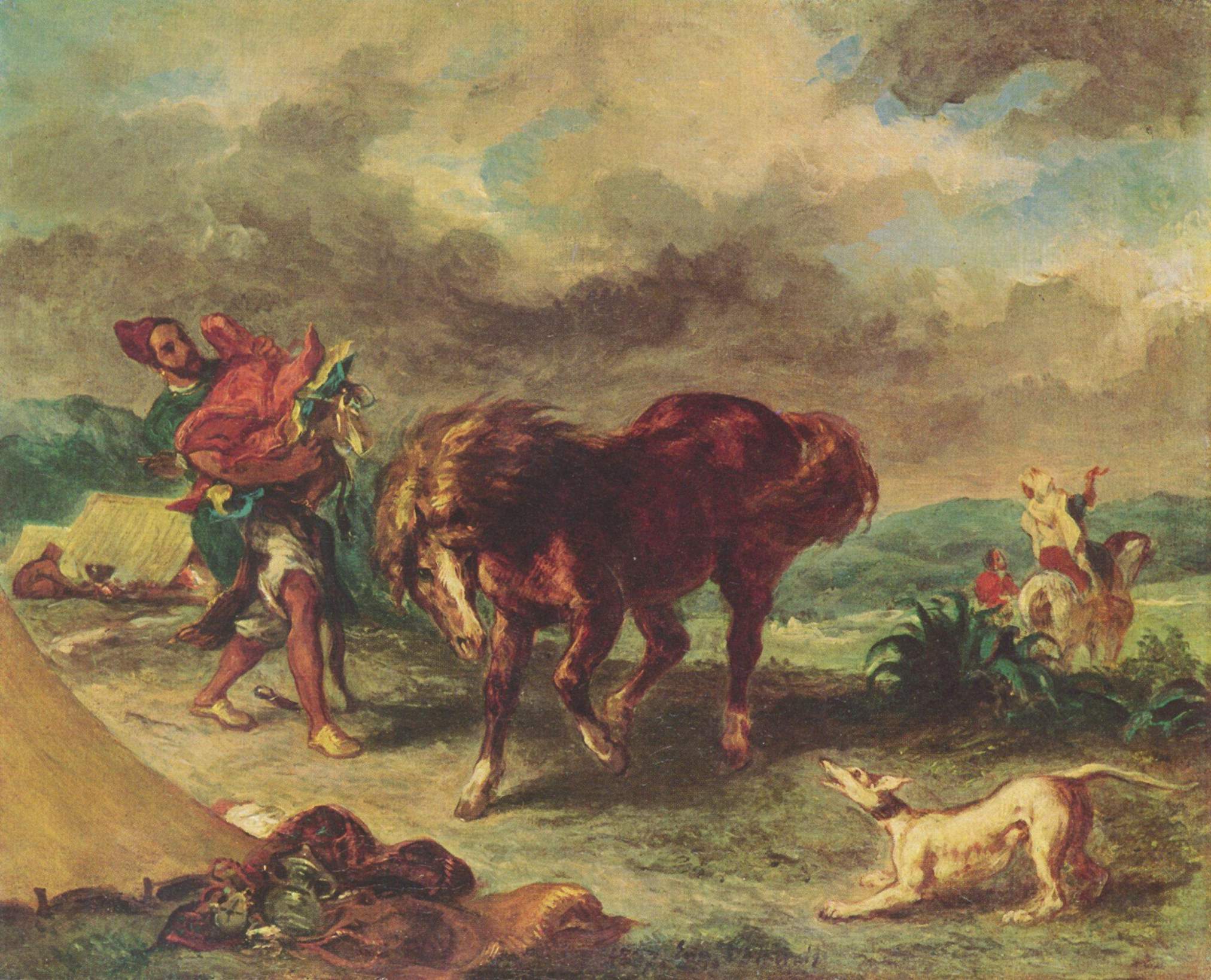 The Moroccan and his Horse
1857
The Moroccan and his Horse
1857
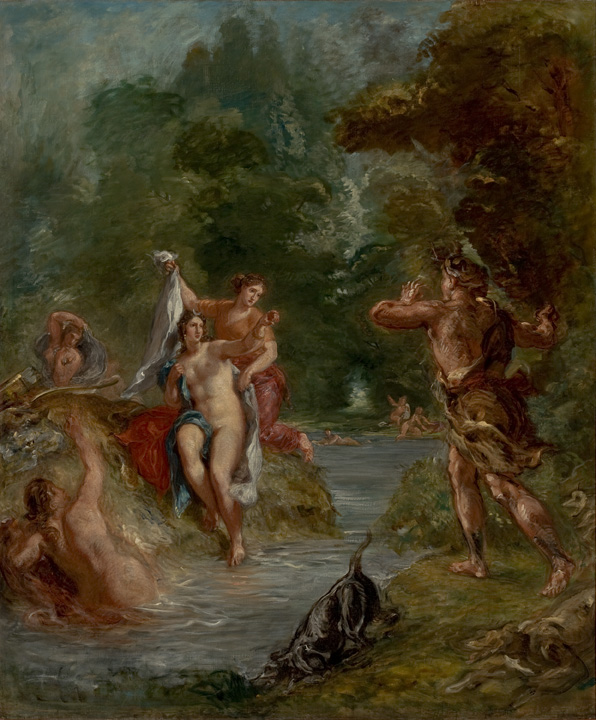 The Summer Diana Surprised by Actaeon
1856
The Summer Diana Surprised by Actaeon
1856
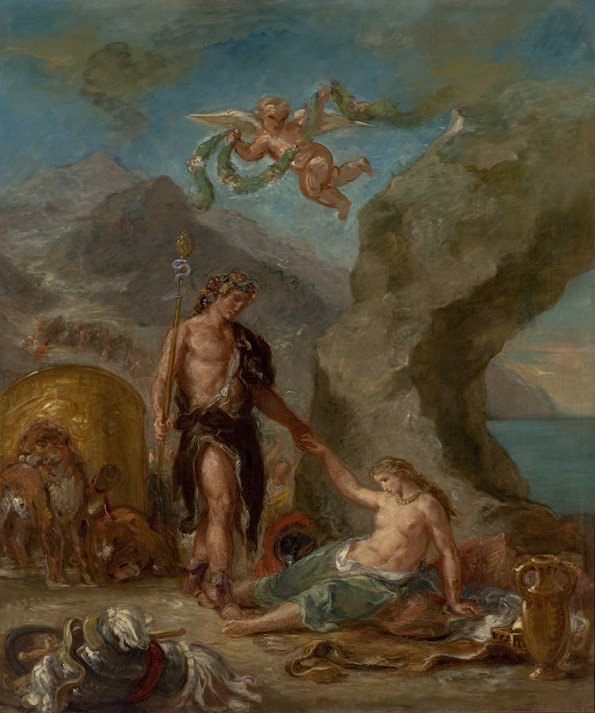 The Autumn Bacchus and Ariadne
1856
The Autumn Bacchus and Ariadne
1856